


Share This Article
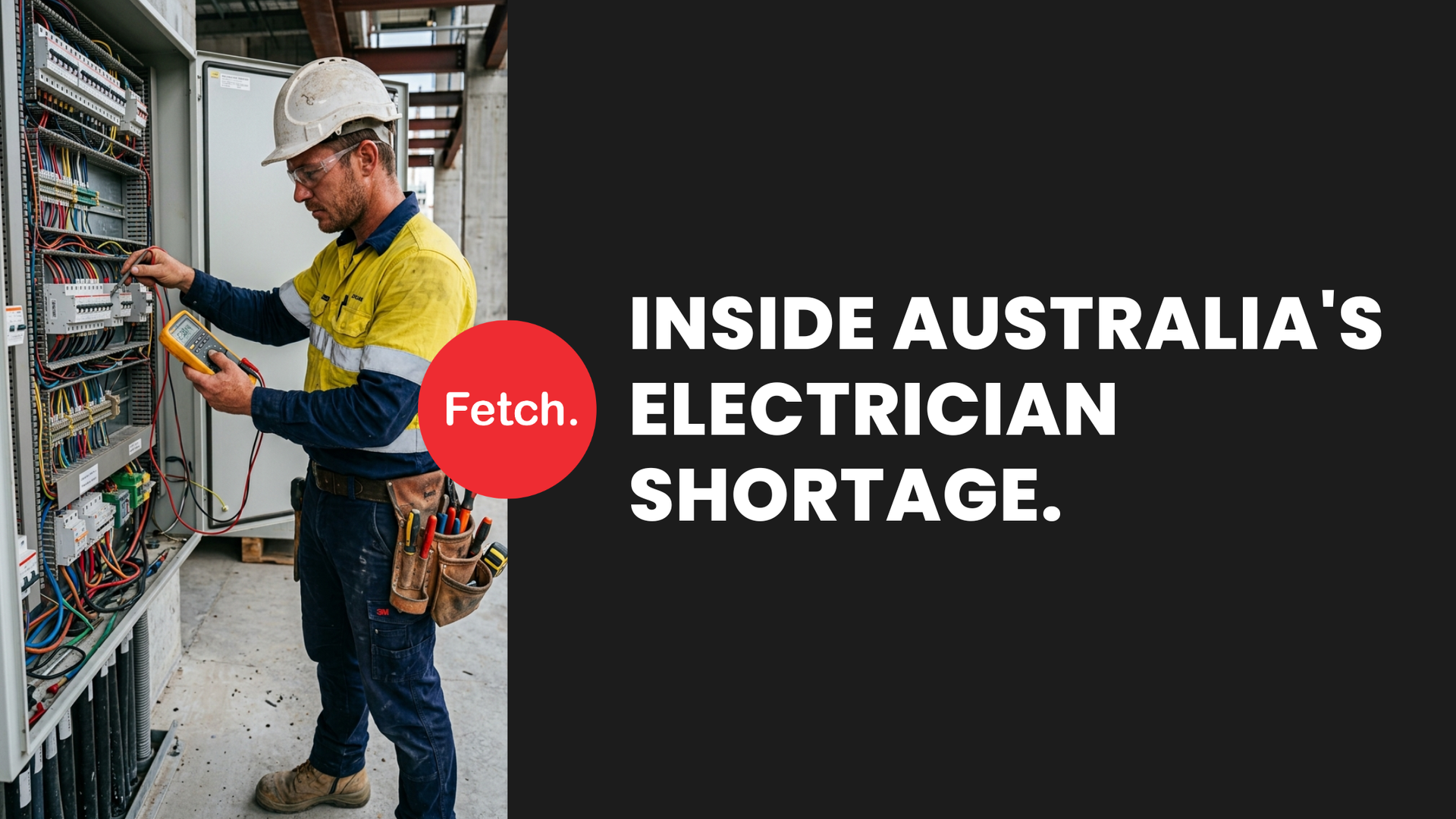
Across our electrical desk, we see it every day. Clients who cannot fill roles, projects waiting on sparkies, and good candidates who have three offers on the table before the week is out. We recruit nationally, with most of our electrical work across Victoria, New South Wales, and Queensland, and in all three, the old approach of posting an ad and waiting no longer works. Here is what we are seeing, and what it means if you are trying to hire.
Why this is one of the tightest markets in years
Every state is short of electricians, and the pressures are stacking up at once. The energy transition is the big one, playing out across the eastern states. Victoria has the SEC driving its renewables build toward 95 percent renewable generation by 2035, with big batteries in Melbourne's west, offshore wind through Gippsland, and Renewable Energy Zones across the regions. New South Wales is delivering its Electricity Infrastructure Roadmap through zones like Central-West Orana, the Hunter, and New England. Queensland is building its SuperGrid and a wave of renewable zones, with heavy wind work through Central Queensland and Gladstone. Every one of these projects needs qualified electricians.
On top of that sits the infrastructure and housing task. Years of road, rail, and infrastructure work have kept demand high, and the national target of 1.2 million new homes adds another layer. Every new home, retrofit, and grid upgrade needs a sparky, and there are not enough to go around.
The data centre boom is a new draw on the same shortage
For a sense of how fast the picture is shifting, look at data centres. Australia is now the second largest data centre market in the world after the United States, with Sydney and Melbourne the main hubs and Queensland close behind. Deloitte Access Economics now tracks 33 major data centre projects worth around $104 billion, a fourfold jump in a single year, and New South Wales and Victoria account for 71 percent of that investment. Data centre electricity demand in Victoria nearly doubled in the year to mid-2026, and nationally the sector's power use is forecast to triple by 2030. Amazon alone committed around $20 billion across New South Wales, Queensland, and Victoria, and it is far from the only one.
Behind those numbers sits a huge amount of electrical work. These are some of the most electrically intensive buildings going up anywhere. One recent Melbourne project saw a single electrical infrastructure contract worth around $100 million for one building on one site. The catch for everyone else is that this pulls from the same pool. Deloitte is blunt about it: utilities, data centres, housing, and defence are all now competing for scarce labour, and capacity constraints look set to persist. Data centre projects come with deep budgets and hard deadlines; they pull qualified people off commercial and construction jobs, and they push rates up across the board. Even if you never touch one, its arrival changes the market you are hiring in.
What the market looks like on the ground
This is structural, not a passing squeeze. Jobs and Skills Australia projects Australia needs around 32,000 more electricians by 2030, and up to 85,000 more by 2050. Underneath it is a supply problem: an ageing workforce, flat VET completions, and apprentice completion rates around 60 percent. The people being trained today are not arriving fast enough to replace the ones leaving.
It shows up in numbers you feel directly. Trades and technical roles now have a fill rate of around 54 percent, well below the national average of roughly 70 percent. For every three trade roles advertised, fewer than two get filled. And the candidates know their worth. With more than 186,000 electricians employed nationally at a 93 percent full time rate, the strong ones are rarely on the open market. If your plan relies on a good ad attracting a strong shortlist, that plan no longer holds.
Rates are climbing, and that is not slowing down
Sustained demand does what it always does to price. Across residential, commercial, and site supervision, rates start high for qualified electricians and climb quickly with experience and responsibility. We have pulled the full picture together in our FY26/27 Salary Guide, which breaks down rates across all six sectors we recruit in, including the electrical trades.
Download the FY26/27 Salary Guide here.
The takeaway for hiring is simple. Competing on base rate alone is a losing game, because someone will always pay more. The businesses winning talent pair a fair rate with progression, project quality, and a reason to stay.
The UK and Ireland pipeline
The local pipeline cannot keep up, so skilled migration is now a real part of the picture, and electricians are among the most prioritised occupations for it. The demand is drawing strong interest from qualified tradespeople in the UK and Ireland, where the pay and conditions compare well, and the trade backgrounds translate cleanly. The talent pool is not confined to the local market, and a hiring process that can reach and support these candidates has access to people a purely local search will miss. That is exactly the kind of thing we handle.
How to hire well in a market this tight
The employers filling roles are the ones who have changed their approach rather than waited for the market to loosen. Move first and move direct, because the best candidates are passive, not scrolling job boards. Build a pipeline before you have the vacancy, so a role opening becomes a conversation rather than a three-month scramble. Offer more than pay, because progression and project quality matter more when candidates have choice. And look beyond the local pool to qualified UK and Irish electricians.
Where Fetch comes in
This is the market our electrical desk works in every day, across Victoria, New South Wales, and Queensland. We know where the candidates are, including the local passive market and the strong pool of qualified UK and Irish electricians looking to make the move. If you are trying to fill electrical roles and the search is coming up short, get in touch. We source proactively, we hold the relationships, and we move quickly.
We don't recruit everywhere, and that's intentional. Electrical is exactly where we do. Let's find you the electricians you need.
Get in touch.
Joe Wilson: joe.wilson@fetchrecruit.com.au | 0473 012 386
Sources: Jobs and Skills Australia Occupation Shortage Report (fill rates, shortages); Australian Energy Council (electrician projections, workforce ageing); Victorian Government and VicGrid (VIC energy targets and REZs); EnergyCo NSW and AER (NSW and QLD REZs); Climate Council and US Studies Centre (data centre demand and investment); Deloitte Access Economics Investment Monitor (data centre project value and labour competition). Figures are current at time of writing; JSA fill rates update quarterly.
Recent Blogs
Australia's construction worker shortage will hit 300,000 by 2027. What the Future Workforce Blueprint means for hiring now.