
Share This Article

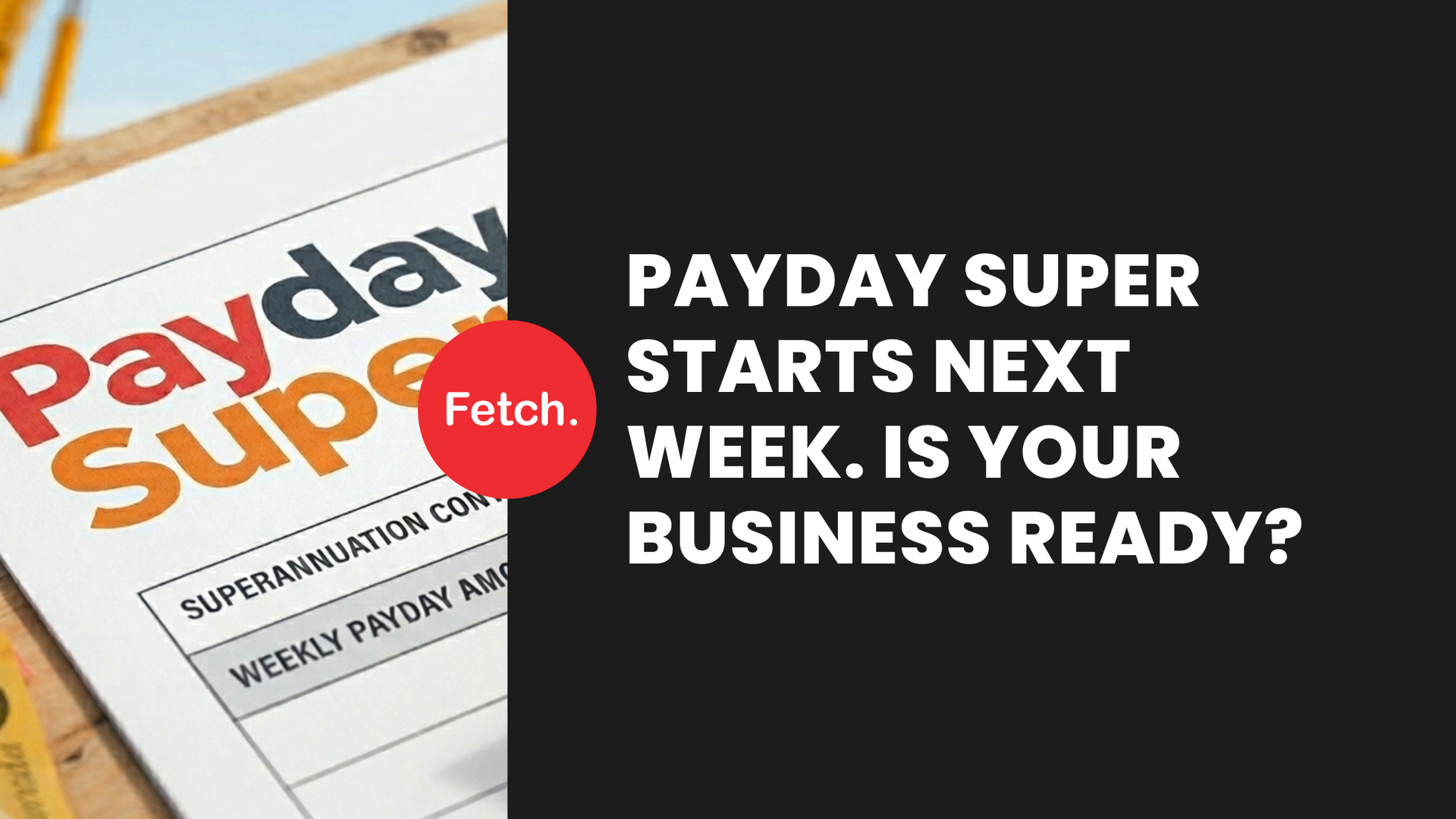
Payday Super comes into effect on 1 July, just over a week away. If you haven't locked in your preparations yet, this is the week to do it.


From 1 July 2026, employers are required to pay superannuation contributions at the same time they pay wages. That's a significant shift from the current quarterly system, and for smaller businesses in particular, it's one of the more meaningful changes to land in a while.


What's actually changing?


Quarterly super payments will no longer apply. Contributions must now be received by the employee's super fund within seven business days of each payday. Depending on your pay cycle, that could mean weekly or fortnightly super payments instead of four times a year.


There's also a change to how super is calculated. Contributions will now be based on an employee's "qualifying earnings," a new term that brings together ordinary time earnings and other payments.


The ATO will also be matching Single Touch Payroll data with fund reporting, giving earlier visibility of unpaid super.


What this means for smaller businesses


For larger businesses with dedicated payroll teams, the transition is straightforward. For smaller operators, particularly in construction, civil and trades where workforce numbers shift regularly, there's just more to manage. More frequent payments, more admin touchpoints, and more to keep on top of with very little runway left before the switch happens.


If the ATO's Small Business Clearing House is part of your current setup, note that it closes on 1 July, so you'll want an alternative sorted this week if you haven't already.


How Fetch can help


When you engage workers through Fetch, they're employed by us, not you. That means payroll, super, and compliance sit with us. As payday super kicks in, that includes making sure contributions are calculated correctly and paid on time every pay cycle, without any of that falling on your plate.


If you're growing your team heading into the new financial year, or you rely on contract and project-based workers, it's a straightforward way to keep your workforce flexible without adding to your admin load.


Hiring as payday super kicks in? Let's make it simple.


Talk to the Fetch team about how we can take payroll and super compliance off your hands, so you can focus on getting the right people on the job. Get in touch today.

Recent Blogs
July 15, 2026
Australia just topped a list you didn't know existed: biggest Claude users on the planet, per capita. Ahead of the US. Ahead of the UK. Ahead of everywhere, according to Anthropic's latest Economic Index. So what are we actually doing with it? Homework, mostly The single biggest use case for Claude in Australia is homework. Almost 10% of everything Australians ask Claude comes from students chasing help with coursework, study materials, quizzes and maths. After that, the top five rounds out with: Business operations, almost 6% of conversations Self-presentation writing, 4.6%, meaning resumes, cover letters, LinkedIn profiles Promotional writing, 4.4% Workplace writing, 4% Translation: outside of study, most of what Australians use AI for is work. Getting hired, sounding professional, getting through the admin faster. We're not just chatting more; we're working differently The report also found Australians have a distinct pattern compared to the rest of the world. We lean more heavily than other countries on Claude for: Instructional design Business operations Reference documentation Editing and rewriting Wellness and fitness We also ask more medical questions and turn to Claude for emotional support more than most other countries do. Who else is up there Singapore, Switzerland and Luxembourg round out the top four behind Australia. New Zealand and Canada sit fifth and sixth, followed by Norway, Iceland, Malta and France. Globally, AI use shifts by day and hour. Personal stuff, emotional support, medical questions, investment advice, spikes on weekends. Business writing, marketing copy and slide decks dominate the work week. News requests peak around 7am. Recipe searches spike at 6pm. Why it's worth paying attention to Nearly one in ten AI conversations in this country involves writing a resume, a cover letter or a LinkedIn profile. That's a lot of Australians using AI to shape how they present themselves for work, and it's only going up. For anyone hiring, that means applications are getting more polished, and harder to tell apart. Worth keeping in mind next time a stack of near-identical cover letters lands in your inbox. If you're hiring right now Expect more applications, and less variation between them. AI smooths out the rough edges, which also smooths out what used to make someone stand out. What to look for instead: Specific project names and real numbers, not just buzzwords Answers that hold up when you ask a follow-up question A cover letter that actually references your role, not a template If you're job hunting right now Everyone else is using AI to write their resume too. Which means blending in is easy and standing out is harder. The fix: Keep the specifics: real projects, real scope, real results Use AI to tighten your writing, not to invent your experience Make sure you can talk through anything on your resume in an interview, because that's where the AI-polish stops mattering Curious what this shift means for how you hire or how you job hunt? Get in touch with Fetch.
More Posts